Useful power
Shape and area are matched to the target angles so the sail adds power where the existing inventory begins to lose effectiveness.
 REYNOLDS SAIL DESIGN
Request a quote
Performance Cruising
A free-flying downwind sail shaped around the angles you want to sail, the inventory already aboard, and the handling that fits your crew.
The RSD approach
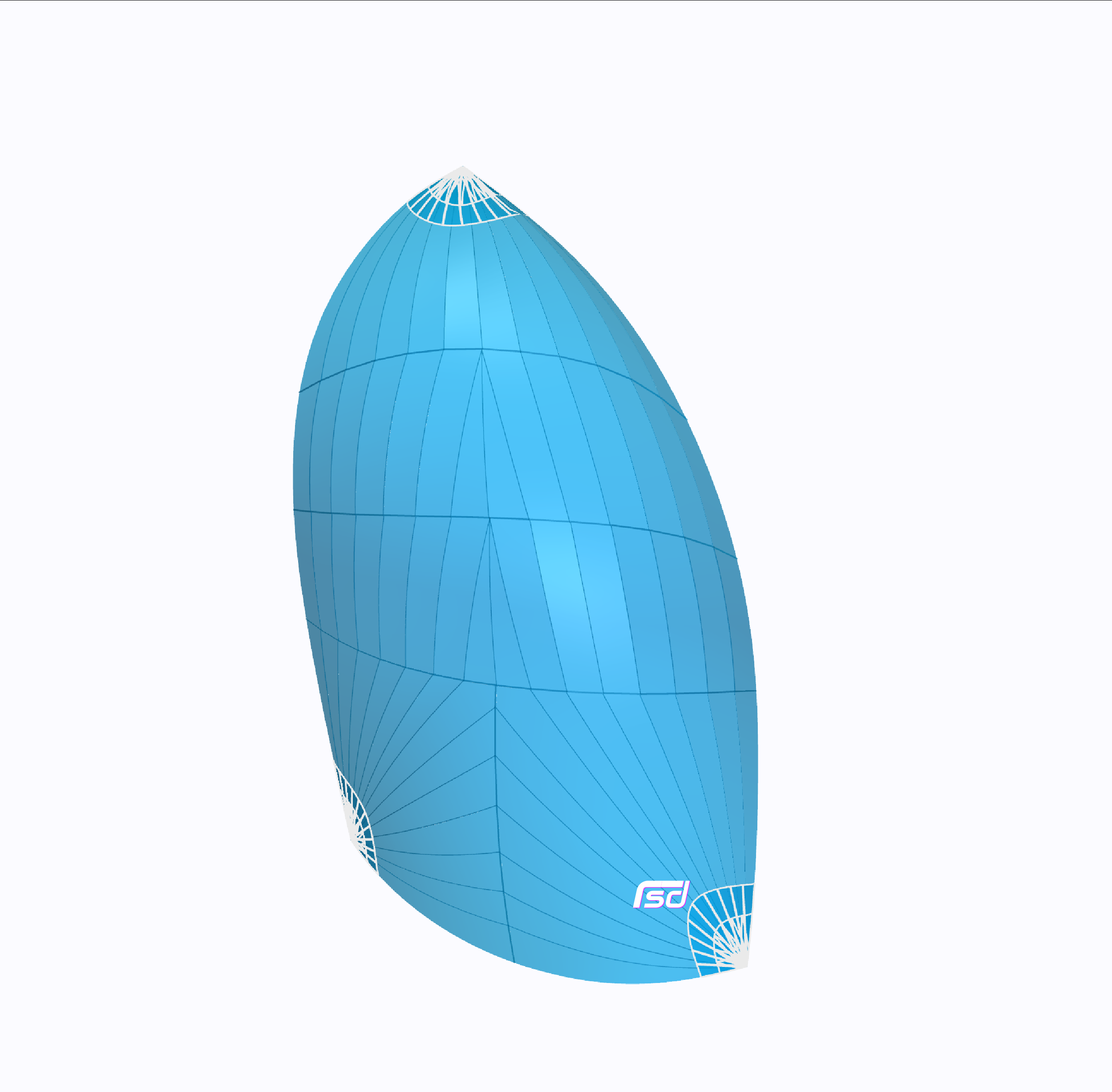
An asymmetrical spinnaker may add light-air reaching power, extend useful performance after bearing away, or provide a deeper-running option. RSD sets the sail’s area, fullness, luff projection, cloth weight, and handling configuration around the role it needs to cover.
Shape and area are matched to the target angles so the sail adds power where the existing inventory begins to lose effectiveness.
The design balances performance with a usable steering and trimming range for practical Performance Cruising.
The sail is specified in relation to the mainsail, working headsails, other downwind sails, crew, and deck configuration.
Sail-role variants
Start with the role rather than the code. Familiar A-designations are shown only as reference points; the final geometry and working range are defined for your boat.
A1-style
A lighter, more reaching-oriented design for generating power at closer angles in lower wind speeds.
A1.5-style
A broad-range option balancing reaching ability, downwind performance, and straightforward handling.
A2-style
More area, depth, and projection for broad angles and stronger performance farther downwind.
A3-style
A smaller, flatter design intended to remain controlled as apparent wind and sailing loads increase.
Construction
Construction is selected after the sail role. RSD specifies cloth weight and reinforcement around sail area, expected loads, handling system, and intended use.
Primary construction
Coated nylon construction delivers dependable flying shape with the durability, tear resistance, and softer handling suited to regular cruising use.
Handling systems
The sail and handling system are specified together. The best solution depends on sail size, deck layout, crew, and how frequently the sail will be set and recovered.
Simple package
A conventional bagged sail keeps the system simple when the crew and deck arrangement support normal hoists and douses.
Controlled douse
A practical option for containing the sail during hoists and recoveries, particularly for short-handed crews or larger sails.
Where compatible
Top-down furling can be considered where the sail geometry, luff system, and intended use support a complete purpose-designed package.
Color and graphics
Nylon color selections and custom graphics are developed after the sail role and construction are defined. Final availability is confirmed in your proposal.
Use the finished SMAR Azure rendering here when the representative sail geometry and color plan are ready.
Photographs or graphics projected onto the final sail rendering can be added here without changing the page layout.
Included as standard
Available options
Final compatibility and hardware requirements are confirmed with the selected sail design.
Custom by design
Every RSD asymmetrical brings together the selected geometry, cloth weight, structure, reinforcement, handling configuration, color, and graphics for your boat and intended use.
This page defines the Performance Cruising Asymmetrical Spinnaker range. Your personalized proposal identifies the exact sail role, material, configuration, options, pricing, and delivery; final geometry is developed from confirmed rig and sail measurements.
Start a conversation
We’re ready to listen.
We’ll recommend the sail role, geometry, construction, and handling system that fit your boat and current inventory.
Request a quote