Rig compatibility
Mast bend, luff curve, and flying shape must be considered together. Different Sabot spars have different bending characteristics, so the sail design should account for the rig rather than assuming every mast behaves identically.
 REYNOLDS SAIL DESIGN
Request a quote
NAPLES SABOT
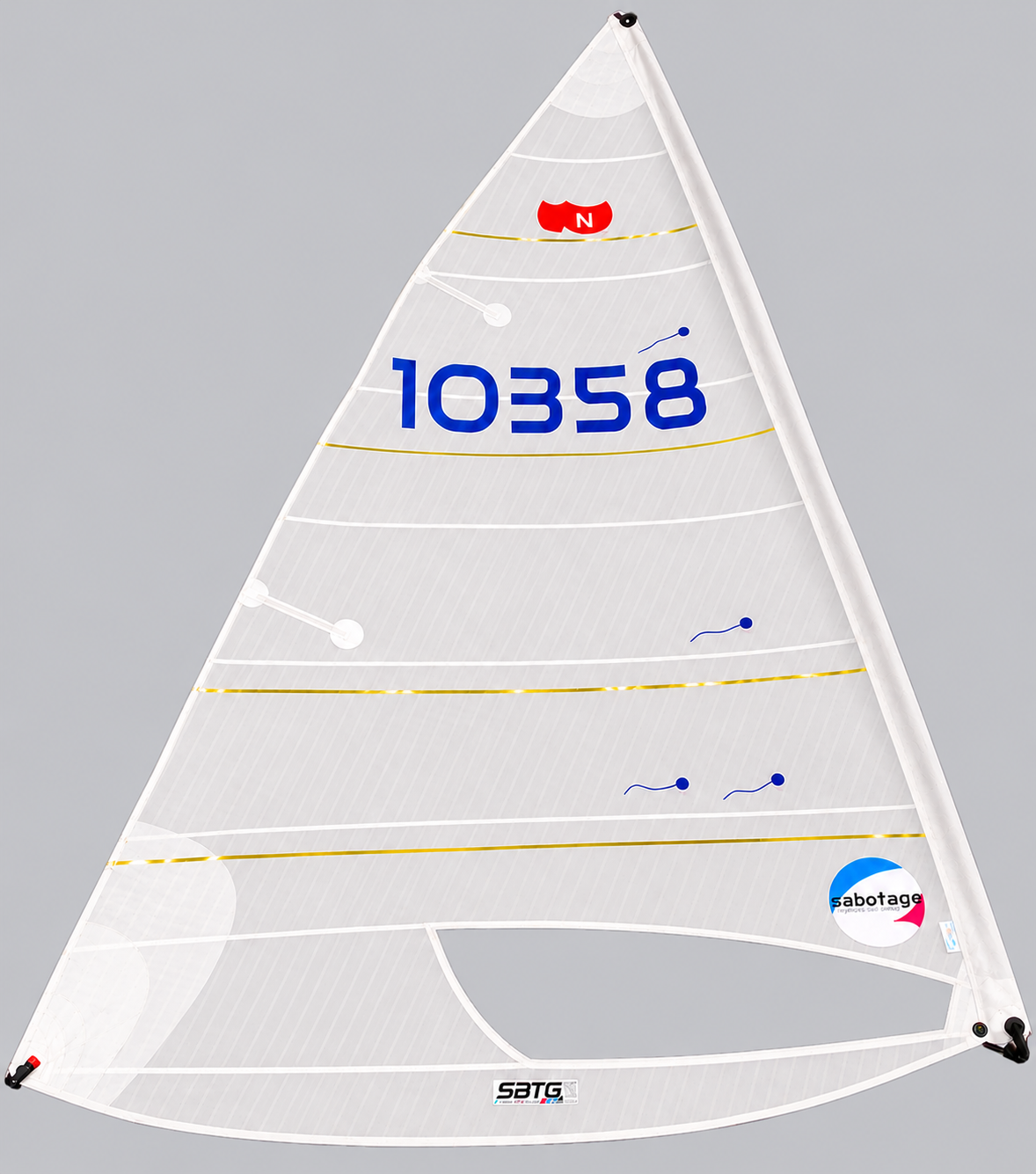
A production Naples Sabot mainsail with horizontal SBTG construction, shaped around the rig and available to configure and order. Direct designer support and sailing feedback guide ongoing refinement.
Distinctive on the water. Serious about the details.
DESIGN PHILOSOPHY
Shape for the rig.
Learn from the sailor.
Mast bend, luff curve, and flying shape must be considered together. Different Sabot spars have different bending characteristics, so the sail design should account for the rig rather than assuming every mast behaves identically.
The Sabot’s leeboard has limited ability to resist lateral force. The objective is efficient forward drive, manageable side force, and sustained boat speed—not simply maximum sail power or pointing angle.
On-water testing and sailor feedback inform continued refinement. Sail shape, mast characteristics, rig settings, and sailing technique are evaluated as a connected system.
SAIL FEATURES & CONSTRUCTION
A deliberate connection between digital sail design and physical construction.
The seams aren't supposed to look like that.
Good.
Traditional sailmaking has long adapted sophisticated three-dimensional designs to familiar panel layouts. We asked a different question.
What if the seams followed the design itself?
SBTG's horizontal seam architecture aligns directly with the shape-control sections in our sail design software, creating a deliberate connection between the geometry we design and the sail we build.
Rather than allowing traditional panel layouts to dictate construction, we're exploring how seam placement can provide greater control over the intended flying shape.
No arbitrary angles. No tradition for tradition's sake.
This is sabotage.
Design the shape. Build the shape. Challenge everything in between.
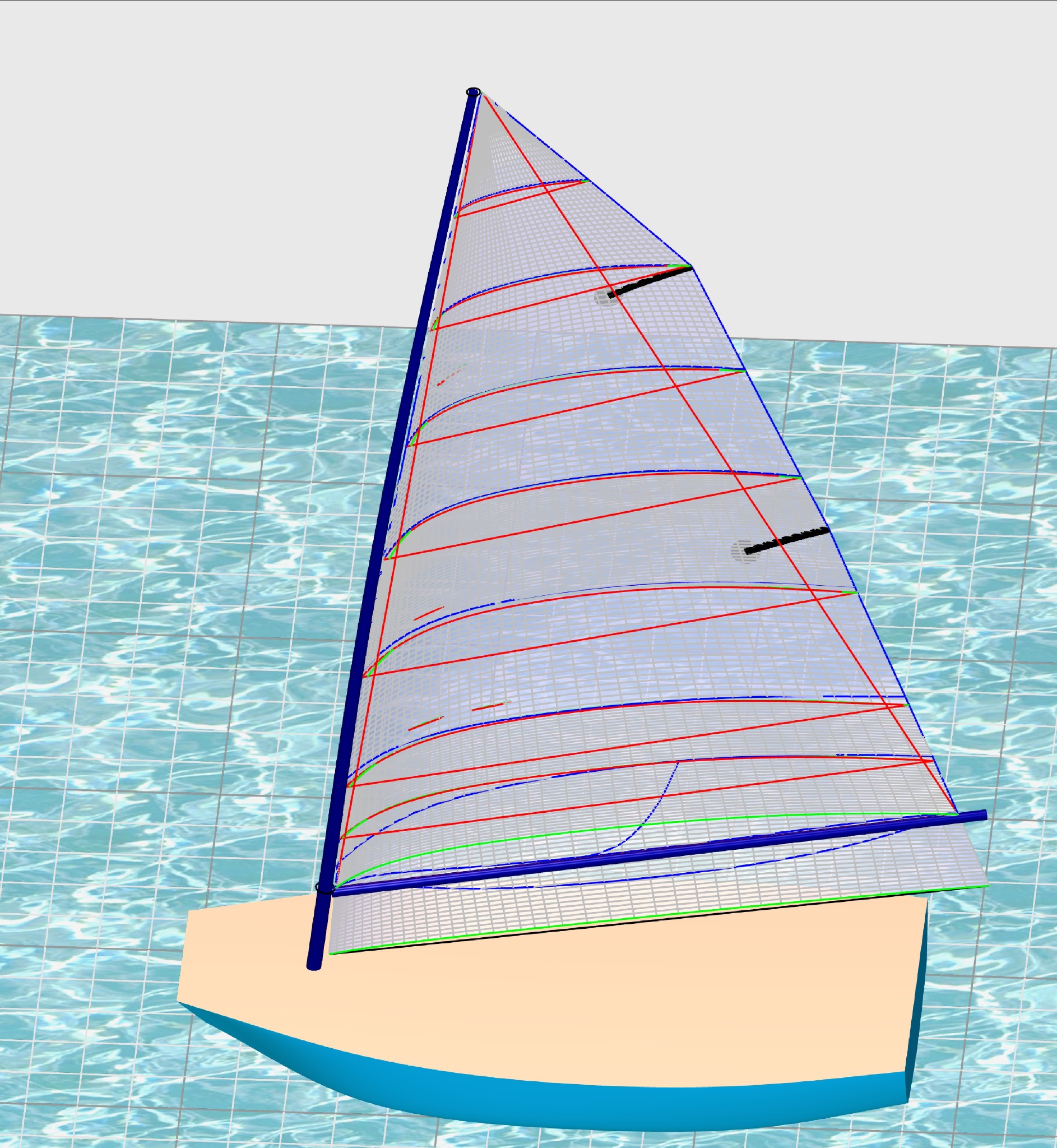 Enlarge elevated view
The SBTG panel layout and seam locations correspond directly with the shaping sections in SMAR Azure. This creates a direct connection between the three-dimensional sail design and the physical sail we build.
The lines coincide in the actual design and are separated slightly in these illustrations for clarity.
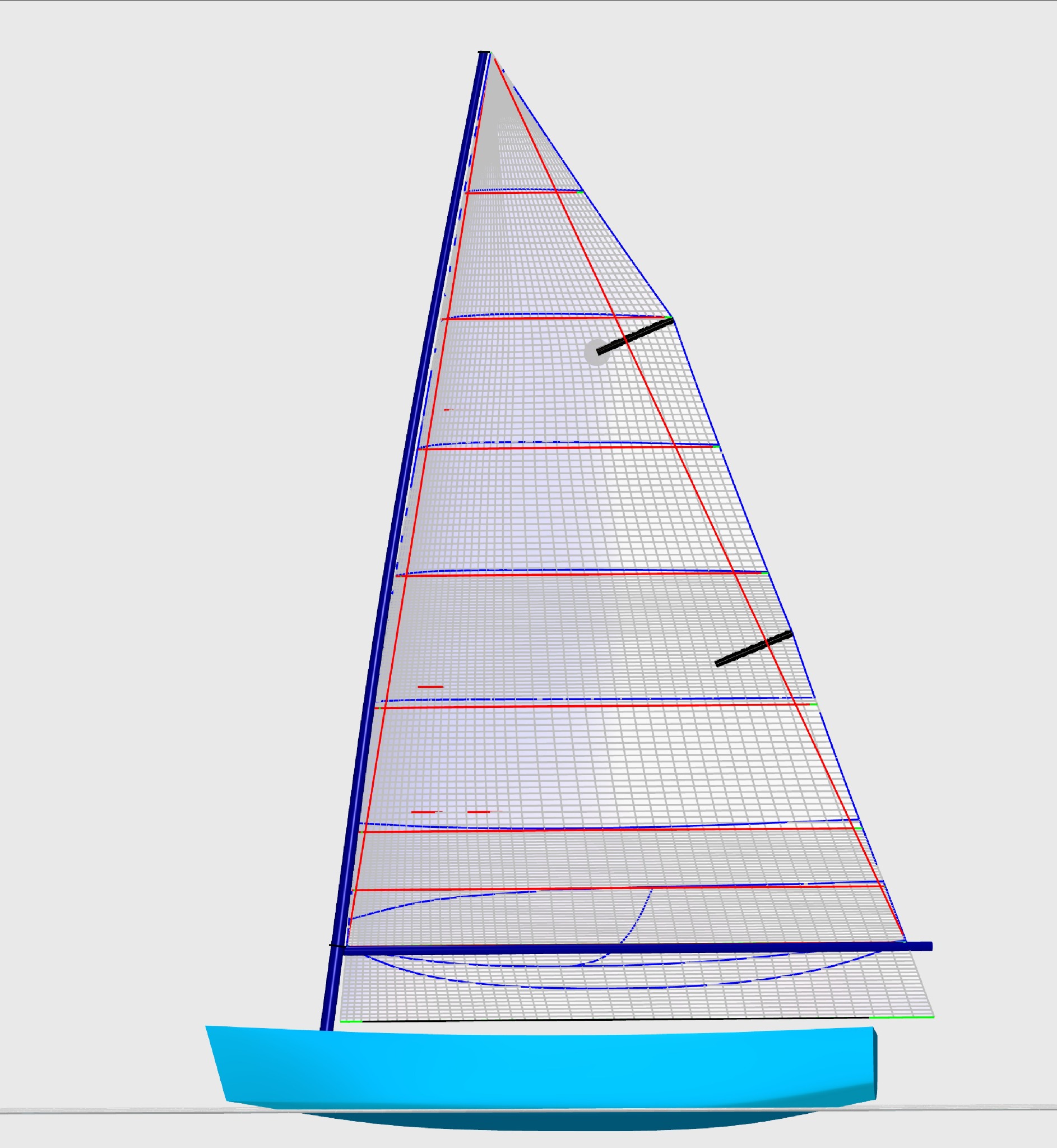 Frontal design viewInspect the shaping sections and panel seams.Enlarge original
CONSTRUCTION DETAILS
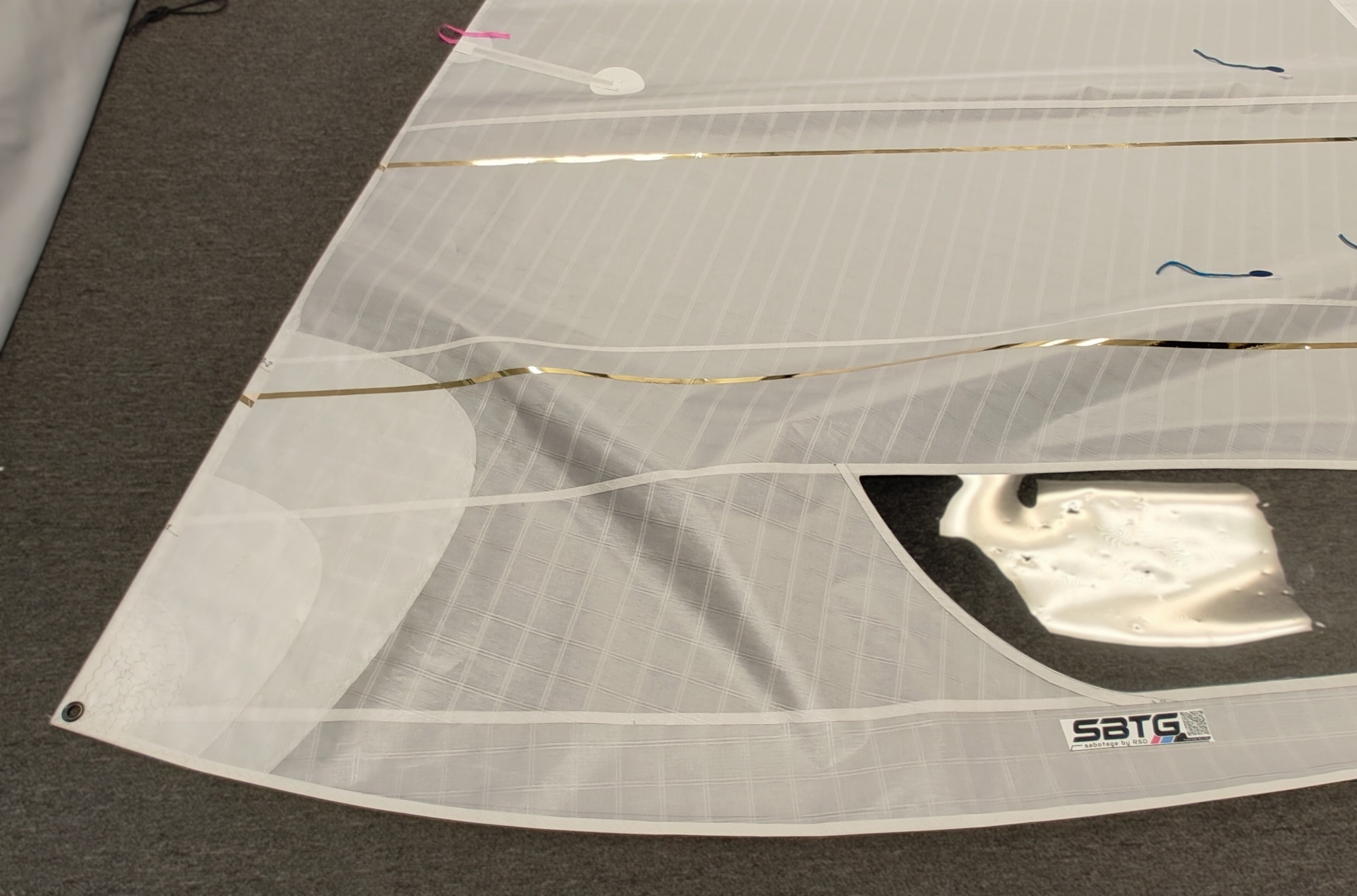
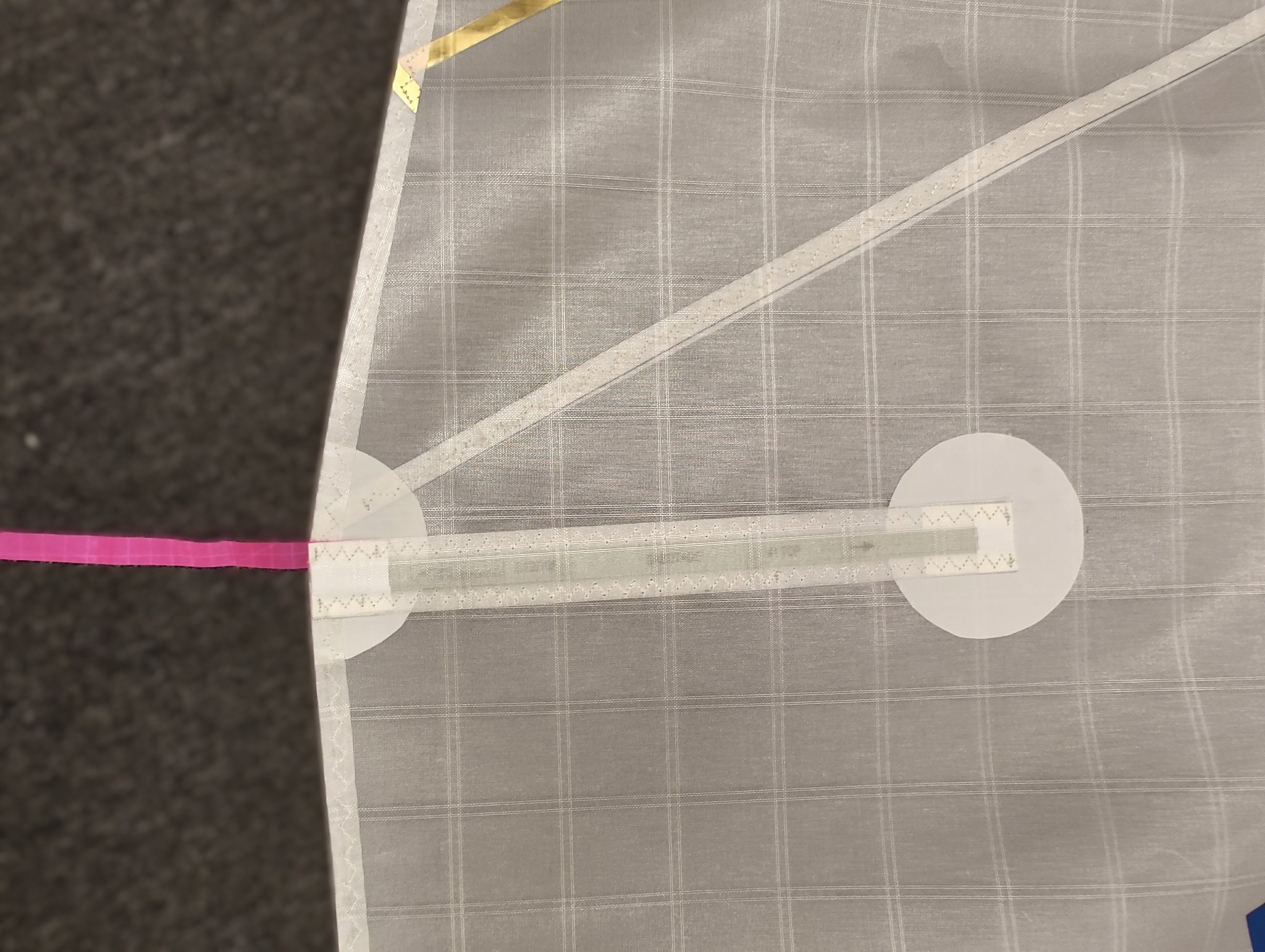
The geometry defined in SMAR carries through to the panel layout of the finished sail. Reinforcement, stitching, and finishing complete the transition from digital design to physical construction.
 Enlarge photo
Horizontal panel seams, reinforcement layout, sail window, and foot construction.
 Enlarge photo
Reinforcement patches, stitched detailing, and sailcloth structure.
 Enlarge photo
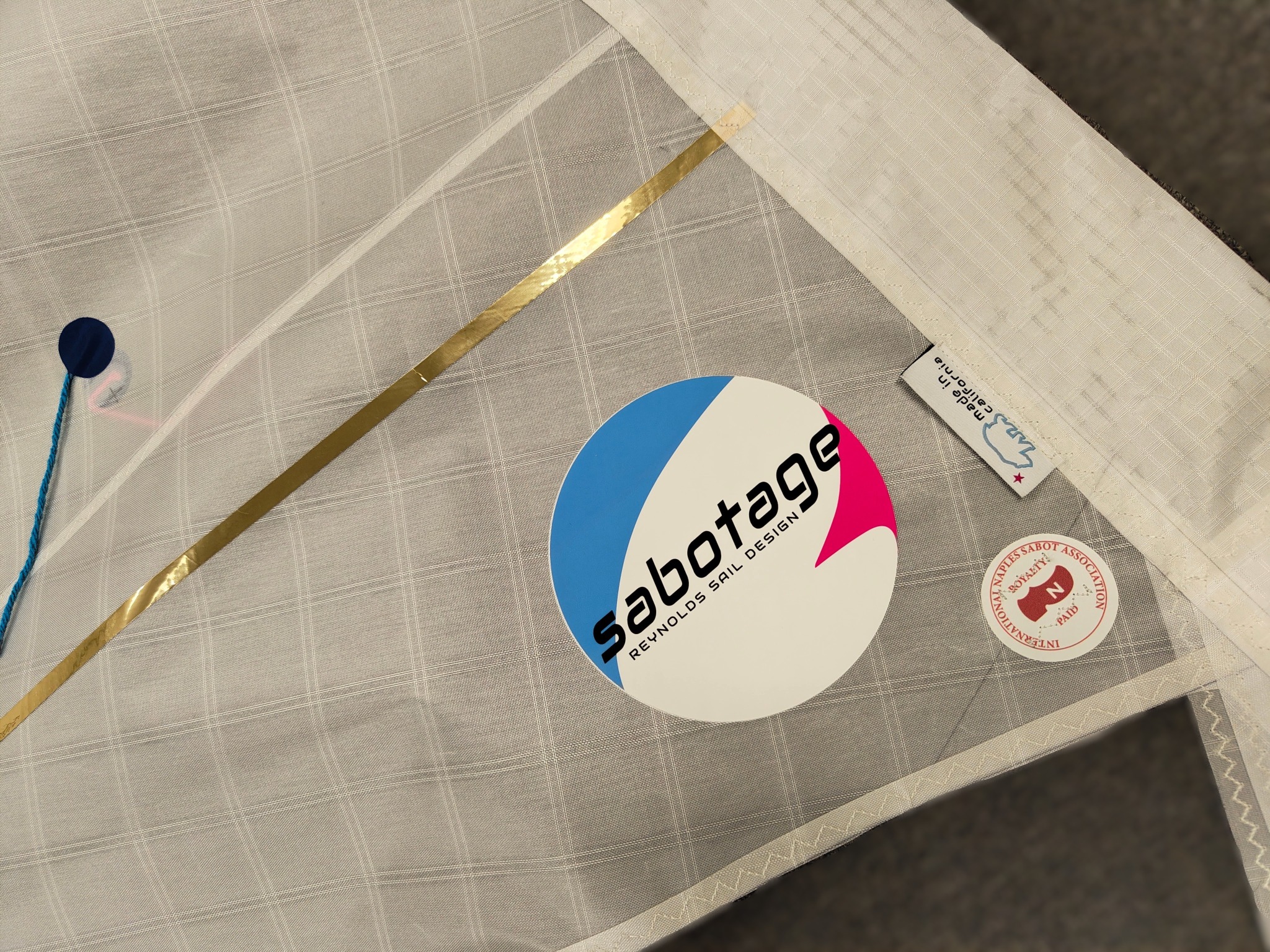
Optional gold draft stripes, SABOTAGE insignia, and class markings.
SBTG/, the first RSD Naples Sabot prototype, used angled seams. The production SBTG sail aligns horizontal seams with SMAR shape-control sections and is available to order. On-water testing continues to guide tuning and future refinements.
A distinctive window shape preserves visibility while keeping graphics outside the clear area.
SBTG branding, manufacturer badge, class mark, and sail-number treatment create a clear identity on the water.
Royalty marking, finishing details, and the current build specification are confirmed with RSD before ordering for class use.
DEVELOPMENT & TESTING
The production SBTG sail is available to order, with horizontal seams connecting digital design geometry directly to the sail's intended flying shape. On-water performance evaluation continues on both Junior and Senior Naples Sabot racecourses, informing tuning and future design refinements.
Document spar characteristics and the setup used to produce the data.
Evaluate how spar bend, luff curve, controls, and flying shape interact.
Compare against familiar class baselines, gather candid feedback, and revise what the evidence supports.
Future development includes weight-specific refinements, with a flatter design for lighter sailors. That design is not yet developed, validated, or available to order.
TUNING & SUPPORT
The sabotage tuning guide offers recommended starting points that will evolve with sailing feedback. Begin with 13' 4" mast rake; adjust from the baseline for your boat and conditions. Use helm balance to guide leeboard adjustments.
SPECIFICATIONS, FAQ & ORDERING
Review the sail specification and compatibility below, then configure your sail in the RSD store.
Share your spar’s maker, model, condition, and any bend data. A new spar is not assumed.
Start at 13' 4". This is a recommended starting point, not a fixed setting for all conditions. See the tuning guide for control settings and leeboard adjustments.
The standard SBTG production sail is available. A separate flatter design for lighter sailors is a future development goal and is not yet developed, validated, or offered as an order option.
Start with the sailor’s experience and goals, boat and spar details, current sail, typical conditions, and desired timing.
The production SBTG sail is available to order. Confirm class measurement, royalty marking, and build specification with RSD for your event. On-water performance evaluation and tuning development continue.
ORDERING
Configure your mast, sail numbers, and draft stripes. See your sail before you order.
CONFIGURE & ORDER